Rural Business Broadband is Getting Faster
Expanded fiber optics, fixed wireless, and LEO satellite constellations are disappearing the digital divide.
By: John Shepler
Businesses located in cities and suburbs have a wealth of choices in connectivity, including Internet access and private lines. Out in rural areas, not so much. In fact, until recently it might be what former FCC Chairman Newton Minnow referred to as a “vast wasteland”, although he was talking about television content. Rural broadband has really been a scarce resource… but it is getting better; A lot better.
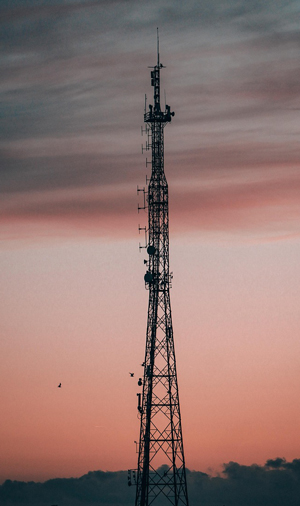 What is Driving Rural Broadband Expansion
The biggest factor driving broadband expansion is broadband itself. The technology is mature and the defacto standard for Internet access. The Internet has also matured and expanded to include nearly every business and consumer in the United States and most worldwide.
Speeds have multiplied and multiplied again. Dial-up is long gone. T1 lines available for rural business are woefully inadequate for most purposes as they are capped at 1.5 Mbps. Even if still available, they won’t be for long. Telcos are abandoning their copper wireline assets as quickly as they can.
Part of the problem in getting high bandwidths into rural areas is the cost per user. Cities with dense populations can easily support hookups to metropolitan area fiber networks. In the countryside, there may be miles and miles between paying customers. The infrastructure costs have been just too high for the revenue generated to support… until recently.
What’s changed? One big change is the advancement of cell phone standards to 4G LTE and 5G. The Internet connectivity supported by these standards just can be satisfied by even multiple copper T1 lines. So, the phone companies have been pulling fiber optic cables and adding microwave relays to remote tower sites.
Another change is a national initiative to get everyone connected, much the same way as rural electrification and universal telephone service interconnected the entire country. This initiative is called BEAD for Broadband Equity, Access and Deployment. It will be underway for maybe another five years before Internet Service Providers can hookup everyone, everywhere. The preferred solution is fiber optics for expandability far into the future.
Multiple Technologies Fill the Broadband Gaps
Fiber is slowly but surely making its way past every business, home, farmstead and cell tower. Those cell towers can do double-duty as Internet Service Providers. With 5G blanketing the country, an easy solution to remote access is to use a Fixed Wireless Access modem plugged into your broadband router. This device is a smartphone without the keys, display and apps. As long as you can get cell service, you can get full time broadband.
In essence, FWA is expanding on the idea of WISPs or Wireless Internet Service Providers. Those operate in limited service areas and deliver broadband from a tower to antennas mounted on your home or business in a direct line of site.
Another source of broadband is straight up to the sky. LEO (low Earth orbit) satellite constellations like Starlink and the upcoming Amazon Project Kuiper and Blue Origin TeraWave are designed to deliver high bandwidths at low latencies to mimic fiber optic broadband but pretty much anywhere no matter how remote.
The next step is direct to phone service that will act as cell towers in space and orbiting data centers powered by solar arrays. It’s likely that some mix of satellites, cell towers and fiber will give us all the connectivity we need for the foreseeable future.
Are you having difficulty getting broadband in a rural or remote area? Opportunities are more available than ever before. Find out what rural broadband solutions are available for your business right now.
Find Business Broadband in Rural Areas
If your business is located in a new subdivision or beyond the city limits, you know how difficult it is to find modern high speed broadband Internet service. We have dozens of providers who offer traditional T1 lines, Ethernet over Copper and Fiber Optic, High Speed Satellite, Gigabit DOCSIS Cable and Wireless broadband connections, including rural areas. Managed SDN Software Defined Networking and SD-WAN available, as desired. You may be surprised at what is currently available for your location at a very reasonable cost. Find out what network services and pricing are available now for your commercial business building anywhere in the U.S. Simply call 1-888-848-8749 or use this handy form...
| Bandwidth & Cloud Services Inquiry |
|
|
Thank you for your interest. A technology services expert will be in touch soon. Please provide accurate phone & email contact information or call toll free for support anytime at 1-888-848-8749. All information you provide will be used only to support your inquiry.


View John Shepler's profile
